



A Ugandan Startup Betting on Trust, Rewards and Community
Uganda’s online marketplace space is getting crowded, and a new name has to earn its place. NatBuy is trying to do that. It calls itself “more than just a classified platform,” and the claim is bold enough that it deserves a closer look.
The opportunity NatBuy is chasing
The timing makes sense. Datareportal counted 13.30 million internet users in Uganda in January 2024, a penetration rate of 27.0 per cent. That is a large audience, and most Ugandans still have room to move more of their buying and selling online. The same source notes that a significant part of the population is underserved by traditional retail. businesstimesugbusinesstimesug
The competition is already there too. Jiji is a well-known free classifieds site, Tubayo has operated since 2018, and Facebook Marketplace is also on the list of options for Ugandan sellers. Telecoms are entering as well. MTN launched Market by MoMo, a new online shopping platform, through its MoMo app and website. A startup like NatBuy has to differentiate itself. businesstimesugpublicisteastafrica
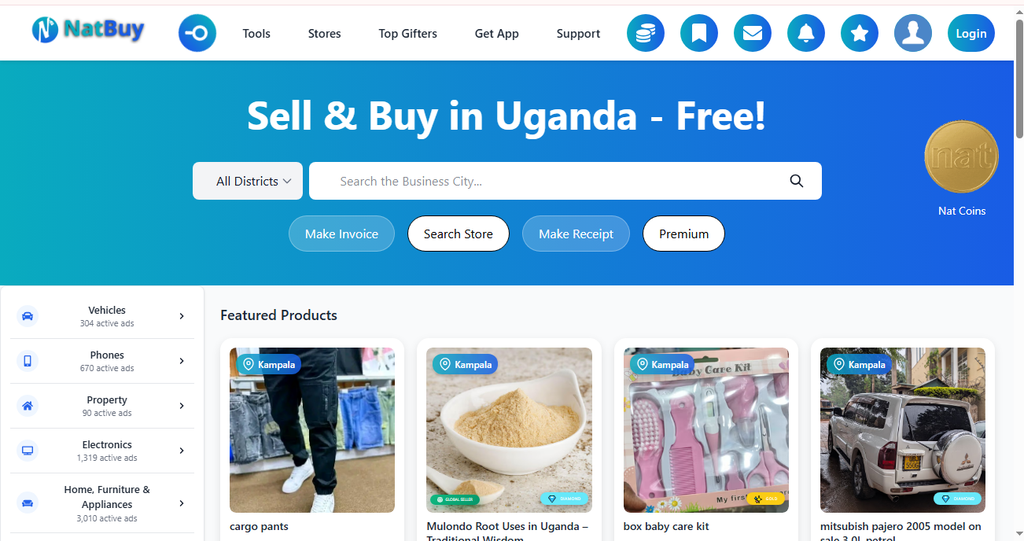
What NatBuy gets right
It is available where Ugandans actually are. NatBuy is on Android, iOS and Huawei, plus the web at natbuy.ug. Including Huawei is a smart choice, because many African startups ignore it. In a market with many budget Android phones, being available on every major store removes friction.
It talks about community, not just listings. Most classifieds sites are simply a place to post an ad. NatBuy’s focus on “a vibrant community of trusted sellers” points at the real problem in Ugandan e-commerce. Buyers worry about fake listings, wrong items and sellers who disappear. A platform that builds seller reputation can win loyalty that a simple ad board cannot.
The rewards angle is a clever hook. Earning rewards for trading gives users a reason to come back instead of using a platform once. It may also help NatBuy win over sellers who already list on several apps.
The challenges ahead
The startup has to deal with several things honestly:
- Trust must be proven, not promised. Phrases like “trusted sellers” need real backing, such as seller verification, ratings, a clear dispute process and quick action against scammers. With the amount of online fraud in Uganda, this will decide whether NatBuy succeeds.
- Rewards must be sustainable. Reward programs attract users quickly, but they cost money. The big question is whether the model still works when the early excitement fades.
- Both sides have to show up. A marketplace is useless without sellers and buyers together. NatBuy must reach enough listings and enough shoppers, in enough places, for the platform to feel busy.
- Payments and delivery matter. Ugandans mostly pay with Mobile Money. Smooth MTN and Airtel Money integration, plus reliable delivery or meetups, will shape the experience far more than the app’s design.
Why it matters for Uganda
Whether or not NatBuy becomes the biggest name, startups like it matter. Homegrown platforms understand local realities that foreign ones often miss: Mobile Money habits, patchy data, mixed languages and the need for trust between strangers. Every Ugandan-built marketplace that takes root creates jobs, helps small sellers reach customers and strengthens the local tech ecosystem.
Final verdict
NatBuy has the right ingredients: wide device availability, a community focus, and a rewards model that could build loyalty. The next stage is the hard part, which is turning a strong vision into a platform people trust with their money. If it delivers on safety, seller quality and rewards, it could carve out a real place in Uganda’s growing digital economy.
Our take: one to watch. The vision is promising, and the proof will come from user experience over the next year.