

Adobe has dominated creative software for decades. Photoshop, Premiere, and Illustrator are industry standards, and they come with a monthly bill that never ends. Now a story is making the rounds that sounds almost too good to be true: an Atlanta developer named Brandon Thomas has reportedly rebuilt a free Adobe alternative using Claude Opus 5.5 and the Rust programming language.
Seven apps. Zero subscription fees. Fully open source.
Whether you’re a designer tired of paying every month, a Linux user who has waited twenty years for Adobe support, or just someone who loves a good David-versus-Goliath story, this one deserves a closer look.
What Is Being Claimed?
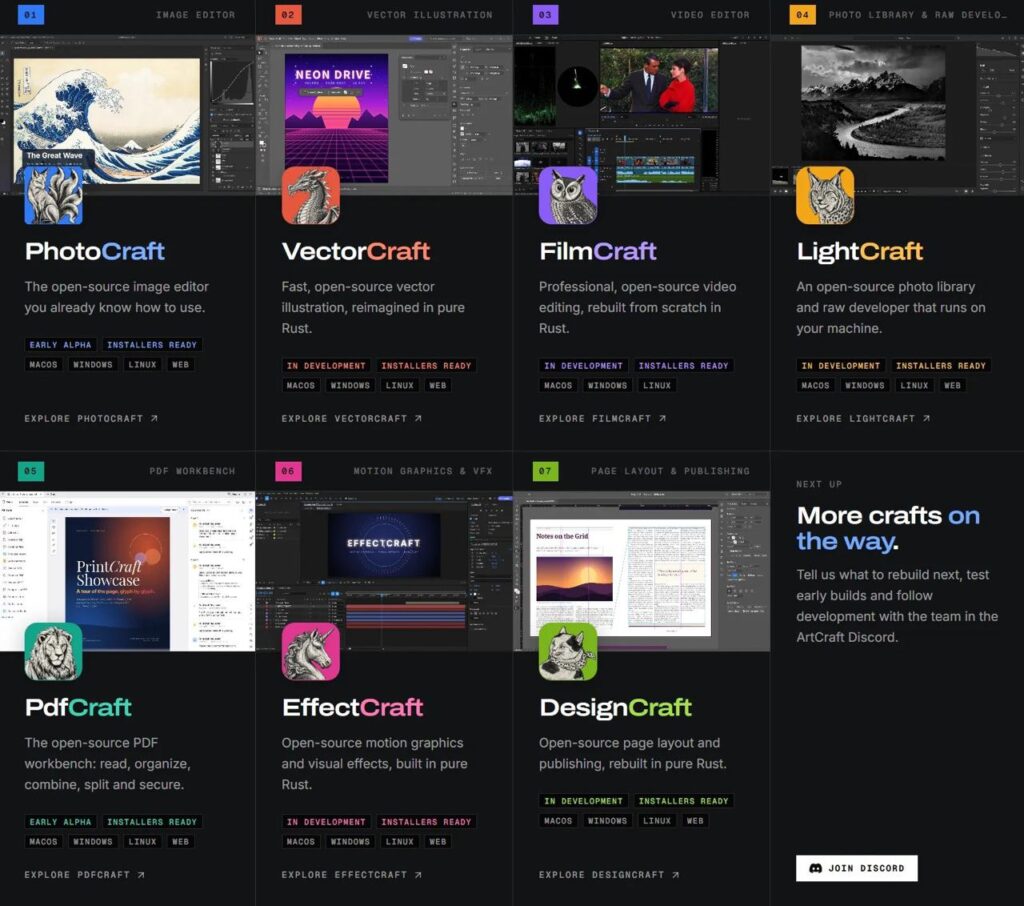
According to the posts going around, Brandon Thomas used Claude Opus 5.5 to build open-source replicas of Adobe’s flagship tools, including equivalents of Photoshop (image editing), Premiere (video editing), and Illustrator (vector graphics). The project is written in Rust, a language known for speed and memory safety, and the reported total is seven apps released free of charge.
If true, that is a big deal. Creative professionals have long complained that there’s no real free Adobe alternative that matches the depth of the originals. Tools like GIMP, Krita, Inkscape, and DaVinci Resolve are excellent, but none is a drop-in replacement for the Adobe ecosystem.
“This Is Not Prompting. This Is Reverse Engineering.”
One commenter on X pushed back on people dismissing the project, and their argument is worth unpacking. In their words, this isn’t “AI prompting” at all. It’s AI-assisted reverse engineering, which is a very different thing.
Typing “make me Photoshop” into a chatbot would produce a toy at best. Reverse engineering means studying how existing software behaves, reading compiled binaries, understanding what they do, and then rewriting that logic in a new language, in this case Rust. AI models are good at exactly this kind of pattern-heavy translation work, and it can compress months of effort into days.
The same commenter described the result as a faster replica that works almost the same as the original. That’s a bold claim, and it’s the one most worth testing yourself.
Why the Linux Community Is Celebrating
For many longtime users, this is personal. One veteran who says they’ve used Adobe products for 25 years described a long-standing frustration: Adobe never released Linux versions of its software. Users have been asking since around 2005, and the complaint goes that Adobe made little secret of prioritizing Windows and macOS, where the platform partnerships and revenue are.
Whether or not that account is entirely fair to Adobe, the sentiment is real. Linux users, many of them creative professionals, have been locked out of the industry-standard toolset for two decades. A free, open-source alternative that runs natively would be a long-awaited win.
The Reality Check: Photoshop Is Enormous
Before anyone cancels their Creative Cloud subscription, it’s worth hearing the skeptics, because they make fair points.
One commenter looked at a related project, PhotoCraft, and called it cool but “not remotely close to Photoshop.” Their estimate was that PhotoCraft is around 250,000 lines of code, while Photoshop is likely tens of millions. Those millions of lines cover huge numbers of edge cases and undocumented behaviors built up over more than 30 years.
That’s the gap. Replicating the headline features is one challenge. Replicating:
- decades of file-format quirks,
- color-management edge cases,
- plugin compatibility,
- performance tuning for huge files,
- and countless obscure behaviors professionals rely on
is another challenge entirely. A replica that “works almost the same” may still fall short in the situations where pros need it most. The takeaway is to keep your expectations realistic: a promising start is not a finished replacement.
The Legal Question Nobody Should Ignore
Reverse engineering sits in a gray area. Depending on where you live, how the work was done, and what’s in the code, projects like this can raise questions about copyright, license terms, and trade secrets. Interoperability and clean-room approaches have legal precedent, but “AI read the binary and rewrote it” is new territory, and courts haven’t fully mapped it.
If you plan to use these tools commercially, look at the project’s license and talk to a legal professional. Open source doesn’t automatically mean legally risk-free.
Why Adobe’s Pricing Fuels the Backlash

Part of why this story spreads so fast is the resentment behind it. Many users feel Adobe moved to a forced subscription model, raised prices over time, and made it hard to simply own the software you use. For freelancers, students, and small studios, those monthly fees add up to a lot over the years.
Open-source alternatives backed by AI development change the economics. If a single developer with an AI model can produce credible competitors in weeks, incumbents can no longer assume that complexity alone protects their pricing.
What This Means for the Future of Software
Even if this particular project turns out to be rougher than the hype suggests, the trend is clear:
- AI is collapsing development time. Work that once took large teams years can now be prototyped by individuals in days.
- Open source gets a supercharge. Free tools can improve faster when AI helps contributors write, port, and test code.
- Incumbents will feel pressure. Subscription-heavy software companies will have to justify their prices with real quality, support, and ecosystem value.
- Rust is rising. Its speed and safety make it a natural target for AI-assisted rewrites of legacy software.
Should You Switch Yet?
Honestly, it depends on your needs. Hobbyists, students, and Linux users have little to lose by trying a free Adobe alternative. Professionals with deadlines, client files, and team workflows should test it carefully alongside their existing tools before committing.
The best way to cut through hype and cynicism alike is to download it, run your own projects through it, and judge for yourself.
So…
Whether Brandon Thomas’s project becomes a genuine Adobe competitor or just a fascinating experiment, it highlights how fast the ground is shifting. AI and open source are reshaping who gets to build professional-grade software, and that should make every subscription-based company pay attention.
What do you think: is this the beginning of the end for expensive creative software, or just an impressive proof of concept? Share your thoughts in the comments.