

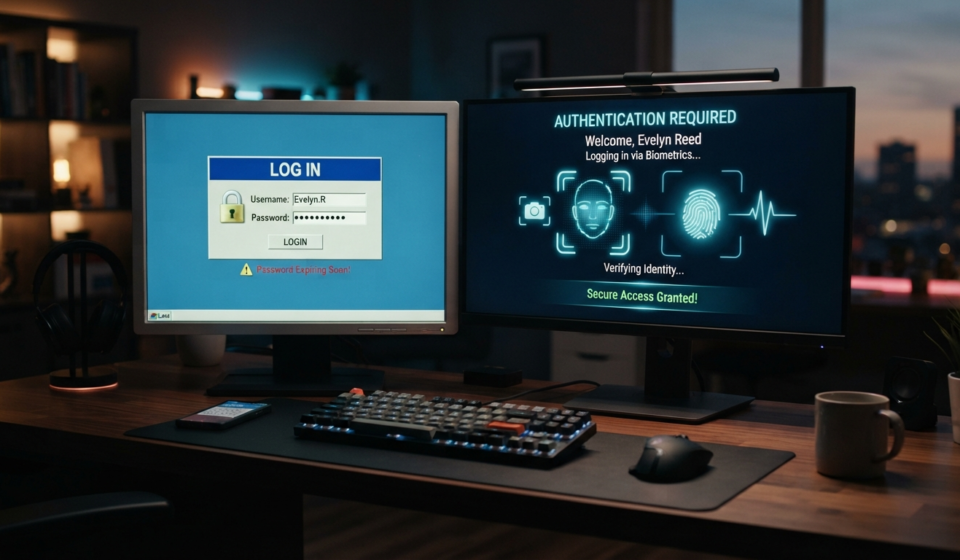

For decades, passwords have been the primary method of protecting our digital lives. From email accounts and social media platforms to online banking and business systems, almost everything we do online begins with a username and a password. They have become so common that most people rarely stop to think about whether there is a better way.
Unfortunately, passwords have also become one of the weakest links in cybersecurity. Every year, millions of passwords are stolen through phishing attacks, malware, data breaches, and weak security practices. Businesses lose billions of dollars due to compromised accounts, while individuals face identity theft, financial loss, and privacy violations.
As technology advances, cybersecurity experts and major technology companies are working toward a future where passwords are no longer necessary. Instead, users will authenticate themselves using faster, more secure, and more convenient methods.
So, what does a passwordless future look like, and how will it affect businesses and individuals?
The Problem with Passwords
Passwords were designed during a time when the internet was much smaller and cybercriminals were far less sophisticated. Today, they face challenges they were never intended to solve.
Many people reuse the same password across multiple websites. Others choose passwords that are easy to remember but also easy to guess. Even when people create strong passwords, they often store them insecurely or fall victim to phishing scams that trick them into revealing their credentials.
For businesses, password management has become expensive. IT teams spend countless hours resetting forgotten passwords, investigating compromised accounts, and educating employees about password security.
The reality is simple: passwords depend heavily on human behavior, and humans naturally make mistakes.
Why Passwords Are Becoming Obsolete
The digital world has changed dramatically.
Modern businesses operate across cloud platforms, mobile devices, remote work environments, and connected services. Users expect instant access without remembering dozens or even hundreds of different passwords.
Technology companies have recognized that security should not rely solely on something people know. Instead, authentication is moving toward verifying something you have, something you are, or a combination of both.
This shift makes it significantly harder for attackers to gain unauthorized access, even if they know personal information about a target.
The Rise of Passwordless Authentication
Passwordless authentication eliminates traditional passwords and replaces them with methods that are both more secure and easier to use.
Instead of typing a password, users may simply:
- Scan their fingerprint.
- Use facial recognition.
- Approve a login from a trusted smartphone.
- Insert a physical security key.
- Enter a one-time verification code.
- Confirm their identity using biometric authentication.
Many people already use passwordless technology every day without realizing it. Unlocking a smartphone with a fingerprint or facial recognition is one of the most common examples.
Biometrics: Your Identity Becomes the Password
Biometric authentication uses unique physical characteristics to verify identity.
These may include:
- Fingerprints
- Facial recognition
- Iris scans
- Voice recognition
- Palm recognition
Unlike passwords, biometric features cannot easily be forgotten.
Modern biometric systems do not usually store an image of your fingerprint or face. Instead, they create encrypted mathematical representations that remain securely stored on your device.
This significantly reduces the risk of credential theft.
However, businesses must still implement strong privacy protections because biometric information is highly sensitive.
Passkeys: The Next Generation of Secure Login
One of the most exciting developments in cybersecurity is the introduction of passkeys.
A passkey allows users to sign in without creating or remembering a password.
Instead, your device securely stores a cryptographic key pair. One key remains on your device, while the other is registered with the online service.
When you log in, your device proves your identity using cryptography rather than sending a password across the internet.
Even if attackers intercept network traffic, there is no password to steal.
Passkeys are also resistant to phishing because they only work with legitimate websites.
Many leading technology companies are already supporting passkeys, making them one of the strongest candidates to replace traditional passwords.
Multi-Factor Authentication Will Continue to Grow
Although passwords may eventually disappear, identity verification will remain extremely important.
Businesses increasingly use Multi-Factor Authentication (MFA), requiring users to verify themselves using multiple methods, such as:
- Something you know (a PIN)
- Something you have (your smartphone)
- Something you are (your fingerprint or face)
Even in a passwordless future, combining several authentication methods will remain one of the strongest defenses against cyberattacks.
The Role of Artificial Intelligence
Artificial Intelligence is transforming cybersecurity.
Instead of checking only passwords, AI systems can continuously analyze user behavior.
For example, AI can detect:
- Unusual login locations
- Suspicious devices
- Impossible travel patterns
- Abnormal typing behavior
- Unexpected account activity
If something appears unusual, additional identity verification may be required before access is granted.
This approach provides security that adapts in real time rather than relying on a single login credential.
Password Managers Still Have a Place
The transition away from passwords will take years.
During this period, password managers remain one of the safest ways to manage online accounts.
They help users:
- Generate strong passwords.
- Store credentials securely.
- Automatically fill login forms.
- Reduce password reuse.
- Monitor compromised credentials.
Businesses should continue encouraging employees to use password managers until passwordless systems become widespread.
What Businesses Should Do Today
Organizations do not need to wait for passwords to disappear before improving security.
Practical steps include:
- Enable Multi-Factor Authentication on all critical systems.
- Educate employees about phishing attacks.
- Adopt passkey support where available.
- Require strong authentication policies.
- Monitor login activity continuously.
- Regularly review user permissions.
- Invest in endpoint security solutions.
Preparing now makes future transitions much smoother.
Challenges of a Passwordless Future
Although passwordless authentication offers significant advantages, it also introduces new challenges.
Businesses must consider:
Device Dependence
Many passwordless systems rely on smartphones or trusted devices.
If users lose these devices, secure recovery procedures become essential.
Privacy Concerns
Biometric information must be protected with the highest security standards.
Organizations should clearly explain how biometric data is collected, stored, and protected.
Compatibility
Not every website or application currently supports passwordless authentication.
Older systems may require upgrades before organizations can fully transition.
User Education
Employees and customers need guidance when adopting new authentication methods.
Proper training reduces confusion and increases trust.
What Will Logging In Look Like in 2035?
Imagine opening your laptop.
There are no passwords to remember.
No login forms.
No forgotten credentials.
Your device recognizes your fingerprint, verifies your identity with encrypted cryptographic keys, checks that you’re using your trusted device, confirms your location is normal, and grants access within seconds.
Behind the scenes, Artificial Intelligence continuously monitors for suspicious activity.
If someone attempts to impersonate you, the system automatically blocks access before any damage occurs.
This vision is no longer science fiction. Many of the technologies needed to make it possible already exist.
The Benefits of Moving Beyond Passwords
A passwordless future offers advantages for both individuals and organizations:
- Stronger protection against phishing attacks.
- Reduced risk of stolen credentials.
- Faster and more convenient logins.
- Lower IT support costs.
- Better user experience.
- Stronger compliance with modern security standards.
- Improved customer trust.
By removing one of cybersecurity’s weakest links, businesses can significantly reduce their exposure to common attacks.
So
Passwords have protected digital identities for decades, but the internet has outgrown them. As cyber threats become more sophisticated, relying on passwords alone is no longer enough to keep personal and business information secure.
The future belongs to authentication methods that are smarter, faster, and more resilient. Passkeys, biometrics, AI-powered security, and multi-factor authentication are paving the way toward a digital world where logging in is both effortless and highly secure.
For businesses, the shift to passwordless technology is not just about convenience it’s about reducing risk, improving customer confidence, and preparing for the next generation of cybersecurity.
At SLecxTec, we believe the future of digital security starts with adopting modern technologies today. Whether you’re securing a personal account or an entire organization, embracing passwordless authentication is a step toward a safer and more connected digital future.