



What Is Forex Trading?
Forex trading, also called foreign exchange trading, is the buying and selling of currencies to make a profit. Instead of trading company shares like in the stock market, forex traders exchange one currency for another.
Currencies are traded in pairs such as EUR/USD. This means you are buying one currency while selling another at the same time. Traders try to profit when currency prices move up or down.
For example, if you think the Euro will rise against the US Dollar, you can buy EUR/USD and later sell it at a higher price.
Important Things to Know About Forex Trading
1. Forex Is a Global Market
Forex trading happens worldwide through banks, brokers, and online trading platforms. There is no single central exchange controlling the market.
2. The Market Runs 24 Hours
The forex market operates 24 hours a day, five days a week. Trading starts on Monday and closes on Friday, allowing people from different countries to trade at almost any time.
3. It Is the Largest Financial Market
Forex is one of the biggest financial markets in the world, with trillions of dollars traded every day. This high activity makes buying and selling currencies fast and easy.
4. Popular Currency Pairs
Some of the most traded currencies include:
- US Dollar (USD)
- Euro (EUR)
- British Pound (GBP)
- Japanese Yen (JPY)
Common currency pairs are:
- EUR/USD
- GBP/USD
- USD/JPY
Why People Trade Forex
Making Profit
Most traders join the forex market to make money from currency price changes. They aim to buy low and sell high.
Protecting Against Currency Changes
Businesses and companies also use forex trading to protect themselves from losses caused by changing currency values.
Risks of Forex Trading
Forex trading can be profitable, but it also has risks. Currency prices can change very quickly because of:
- Economic news
- Government decisions
- Interest rate changes
- Global events
Because of this, beginners should first learn how the market works and practice before investing real money.
Ad:

Types of Forex Markets
1. Spot Market
The spot market is the most common type of forex trading. Traders buy or sell currencies at the current market price. Most beginners start here because it is simple and easy to understand.
2. Forward Market
In the forward market, two parties agree to trade currencies at a future date using a price agreed on today. This is mostly used by businesses to reduce risk.
3. Futures Market
The futures market is similar to the forward market, but trades are done using standard contracts on official exchanges.
4. Options Market
The options market gives traders the right, but not the obligation, to buy or sell currencies before a certain date. This market is more advanced and often used by experienced traders.
Now, How to Trade Forex

Starting forex trading may feel confusing at first, but learning step by step can make the process much easier. Forex trading involves buying and selling currencies with the goal of making a profit from price movements.
Here’s a beginner-friendly guide to help you start trading forex confidently.
1. Choose a Trusted Forex Broker
The first step is finding a reliable forex broker. A broker is the platform that allows you to buy and sell currencies online.
When choosing a broker, look for:
- Strong security and regulation
- Easy-to-use trading platform
- Fast deposits and withdrawals
- Low trading fees and spreads
- Good customer support
- Educational tools for beginners
Popular trading platforms include MetaTrader 4 (MT4), MetaTrader 5 (MT5), and cTrader.
A good broker can greatly improve your trading experience, especially as a beginner.
2. Open a Trading Account
After selecting a broker, create your trading account. Most brokers offer:
- Demo Accounts – for practice using virtual money
- Live Accounts – for real trading with actual money
Beginners are usually advised to start with a demo account first. This helps you understand how the market works without risking your money.
You will also need to:
- Verify your identity
- Add funds to your account
- Set up your trading platform
3. Learn the Basics of Forex Trading
Before risking real money, learn important forex concepts such as:
- Currency pairs
- Pips
- Spreads
- Leverage
- Margin
- Stop-loss and take-profit orders
For example:
- A pip is the smallest price movement in forex.
- Leverage allows traders to control bigger trades using smaller amounts of money.
- A stop-loss automatically closes a trade to reduce losses.
You should also understand that the forex market is affected by:
- Interest rates
- Inflation
- Economic news
- Political events
- Central bank decisions
The more knowledge you have, the better your trading decisions become.
4. Create a Trading Plan
Successful traders usually follow a trading plan instead of trading emotionally.
Your trading plan should include:
- Your financial goals
- Risk management rules
- Preferred trading strategy
- Daily or weekly trading targets
- Maximum amount you can afford to lose
A common beginner mistake is risking too much money on one trade. Many professional traders risk only 1–2% of their account per trade.
Discipline is one of the most important skills in forex trading.
5. Choose the Right Currency Pairs
As a beginner, it is better to focus on major currency pairs because they are more stable and easier to trade.
Popular beginner-friendly pairs include:
- EUR/USD
- GBP/USD
- USD/JPY
- USD/CHF
These pairs usually have:
- High trading volume
- Lower spreads
- Better market information
Avoid trading too many currency pairs at once. Master a few first.
6. Analyze the Market
Forex traders use two main types of analysis:
Technical Analysis
This involves studying:
- Price charts
- Patterns
- Indicators
- Market trends
Popular indicators include:
- Moving Averages
- RSI (Relative Strength Index)
- MACD
- Bollinger Bands
Fundamental Analysis
This focuses on news and economic events such as:
- Inflation reports
- Employment data
- Interest rate decisions
- Political news
Combining both types of analysis can improve your trading decisions.
7. Place Your First Trade
When you are ready, you can open a trade.
You will decide whether to:
- Buy (Go Long) if you think the price will rise
- Sell (Go Short) if you think the price will fall
Before opening a trade, set:
- Stop-loss level
- Take-profit level
- Trade size
Risk management is extremely important because the forex market can move very fast.
8. Monitor Your Trades Carefully
After placing trades, monitor the market regularly.
Things to watch include:
- Economic news releases
- Price movements
- Market volatility
- Overnight holding charges (swap fees)
Some traders hold trades for minutes, while others keep positions open for days or weeks depending on their strategy.
Avoid emotional decisions such as:
- Revenge trading
- Overtrading
- Increasing trade size after losses
Patience is key in forex trading.
9. Review and Improve Your Trading
Every trade teaches a lesson. After closing trades:
- Review what worked well
- Identify mistakes
- Improve your strategy
Many successful traders keep a trading journal where they record:
- Entry and exit points
- Profit or loss
- Reasons for taking the trade
- Emotional state during trading
Tracking your progress helps you grow faster as a trader.
Extra Tips for Beginner Forex Traders
- Start small
- Never trade money you cannot afford to lose
- Practice consistently
- Focus on learning before profits
- Avoid unrealistic “get rich quick” expectations
- Keep emotions under control
Forex trading is a skill that takes time to master.
Why Forex Trading Is Difficult
Forex trading can be profitable, but it is also one of the most challenging financial markets in the world. Many beginners enter the market expecting quick money, only to discover that forex trading requires patience, discipline, and continuous learning.
Understanding the challenges of forex trading can help you prepare better and avoid common mistakes.
1. Fast Market Movements and High Volatility
The forex market moves very quickly. Currency prices can change within seconds because of:
- Economic news
- Political events
- Interest rate announcements
- Global conflicts
- Central bank decisions
Sometimes the market becomes extremely volatile. For example, in 2015, the Swiss franc suddenly gained huge value against the euro after a surprise decision by the Swiss National Bank. Many traders lost large amounts of money within minutes.
This shows how quickly forex prices can move, even when traders think the market is stable.
2. Leverage Can Increase Both Profits and Losses
One reason many people are attracted to forex trading is leverage.
Leverage allows traders to control large positions using a small amount of money. For example, with 50:1 leverage, $1,000 can control a trade worth $50,000.
While leverage can increase profits, it can also multiply losses very quickly.
Even a small market movement against your trade can wipe out your account if proper risk management is not used.
Because of this, beginner traders are usually advised to use low leverage and trade carefully.
3. Forex Trading Is Complex
Many things affect currency prices at the same time, including:
- Interest rates
- Inflation
- Employment reports
- Government policies
- Political events
- Global trade
- Market sentiment
A trader may correctly predict economic news but still lose money if unexpected world events change market direction.
This makes forex trading more complicated than many beginners expect.
4. Emotional and Psychological Pressure
Forex trading is not only about charts and strategies. It also tests emotional control.
Common psychological mistakes include:
- Overtrading after losses
- Trading out of anger or frustration
- Closing profitable trades too early
- Holding losing trades for too long
- Fear of missing out (FOMO)
- Greed during winning streaks
Emotions can cause traders to ignore their trading plans and make poor decisions.
Successful forex traders usually focus heavily on discipline and patience.
5. The Market Operates 24 Hours a Day
Unlike stock markets that close daily, the forex market runs 24 hours a day during weekdays.
This can become stressful because traders may feel pressure to:
- Constantly monitor trades
- Stay awake during major market sessions
- React to overnight price changes
Without proper planning, this can lead to mental fatigue and poor trading decisions.
Many traders use stop-loss orders and clear trading schedules to reduce stress.
6. Retail Traders Compete With Large Institutions
Individual traders are competing against:
- Banks
- Hedge funds
- Financial institutions
- Professional trading firms
These institutions often have:
- Advanced trading technology
- Faster execution speeds
- Professional analysts
- Better market data
- Large trading capital
This creates a difficult environment for beginner traders.
However, retail traders can still succeed by focusing on:
- Strong risk management
- Simple trading strategies
- Discipline
- Continuous learning
7. Most Beginners Lose Money Quickly
One major reason forex is difficult is that many beginners:
- Start without enough education
- Use high leverage
- Expect fast profits
- Ignore risk management
- Trade emotionally
Forex trading is a skill that usually takes time to develop. Many successful traders spend months or years learning before becoming consistently profitable.
How to Reduce Risk in Forex Trading
Here are a few ways beginners can trade more safely:
- Start with a demo account
- Risk small amounts per trade
- Use stop-loss orders
- Avoid overtrading
- Focus on learning first
- Create a trading plan
- Keep emotions under control
Risk management is often more important than finding the “perfect” strategy.
How Much Money Do You Need to Start Forex Trading?
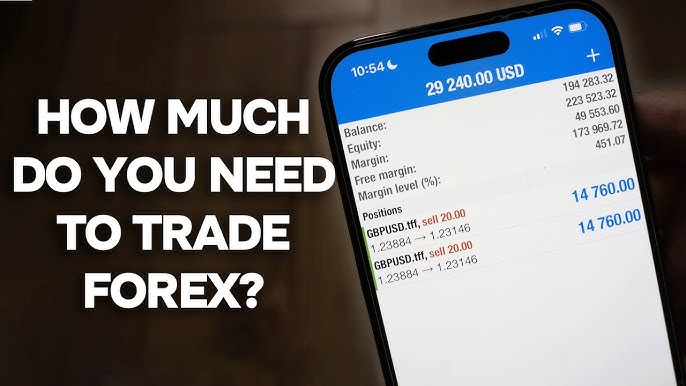
One of the most common questions beginners ask is: “How much money do I need to start forex trading?” The good news is that forex trading is accessible to many people because some brokers allow traders to start with a very small amount of money.
However, the amount you start with can affect your risk level, profits, and overall trading experience.
Minimum Amount Needed to Start Forex Trading
Many forex brokers today allow beginners to open trading accounts with as little as:
$10
$50
$100
Some brokers even offer cent accounts where small deposits are converted into trading cents, allowing beginners to practice with lower risk.
Although you can technically start with a small amount, having a larger balance usually provides better risk management and flexibility.
Recommended Starting Capital for Beginners
Here are common starting ranges for beginner traders:
Starting With $10–$50
This is mainly suitable for:
Learning the platform
Practicing strategies
Understanding market movements
At this level:
Profits are usually very small
Risk can be very high if using large leverage
One bad trade can quickly affect the account
This amount is better for education rather than serious income generation.
Starting With $100–$500
This is a more realistic beginner starting range.
With proper risk management, traders can:
Practice more comfortably
Manage trades better
Reduce the chances of losing the account quickly
Many beginners choose this range because it allows them to gain experience without risking too much money.
Starting With $1,000 or More
A larger account gives traders:
Better risk control
More flexibility
Lower emotional pressure
Ability to use smaller lot sizes safely
Professional traders often prefer larger balances because they can manage trades more effectively while protecting their capital.
Other Costs to Consider
Forex trading is not only about the deposit amount. Traders should also consider:
Internet and Electricity
A stable internet connection and reliable power are important for online trading.
Trading Device
Most traders use:
Smartphones
Laptops
Desktop computers
A faster device can improve trading performance.
Education and Learning
Some traders spend money on:
Forex courses
Books
Trading mentorship
Market analysis tools
Investing in education is often more valuable than depositing large amounts without knowledge.
The Role of Leverage
Forex brokers offer leverage, which allows traders to control larger positions with smaller deposits.
For example:
With 100:1 leverage, $100 can control a trade worth $10,000.
While leverage can increase profits, it also increases losses very quickly.
Many beginners lose money because they misuse leverage and take oversized trades.
Using low leverage and proper risk management is usually safer for new traders.
Risk Management Is More Important Than Starting Capital
Having a large account does not guarantee success. What matters most is:
Discipline
Strategy
Emotional control
Risk management
Many experienced traders recommend risking only 1–2% of your account per trade.
This helps protect your account from large losses.
Can Forex Become a Full-Time Income?
Forex trading can generate income, but it usually takes time and experience.
Small accounts may help traders learn, but they often do not produce large profits immediately. Consistent profitability usually requires:
Skill development
Patience
Long-term learning
Proper capital management
Beginners should avoid expecting instant wealth from forex trading.
Tips for Beginners Starting With Small Capital
Start with a demo account first
Trade small lot sizes
Avoid high leverage
Focus on learning instead of fast profits
Protect your trading capital
Build consistency slowly
Growing a small account safely is often better than taking large risks.
So
You can start forex trading with a small amount of money, sometimes as little as $10 or $50. However, beginners should focus more on learning and risk management than trying to make quick profits.
Starting with an amount you can afford to lose, while practicing discipline and patience, can help you build experience and improve over time.